
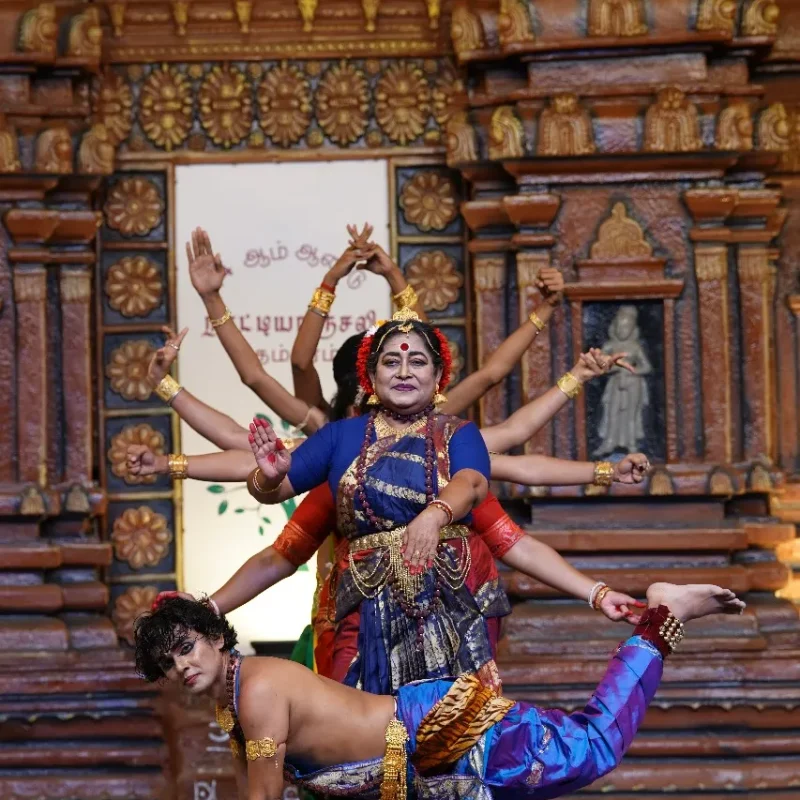
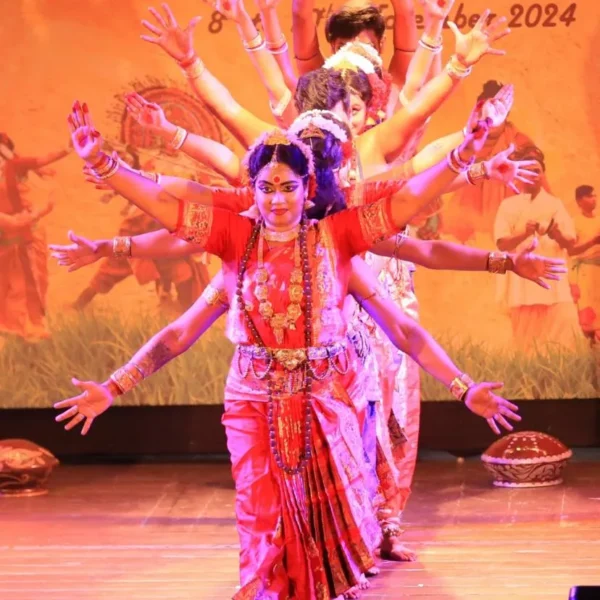
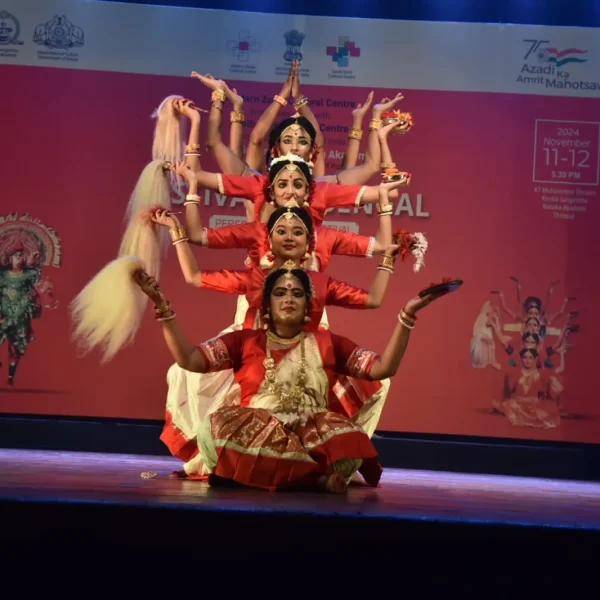
Gaudiya Nritya, a classical dance form of Bengal, is a composite art form, enriched with dance, music, drama, colour and rhythm. Though its roots lie in Bharata’s Natyashastra, its evolution and growth can be traced to the traditions of dance existing in Gauda Vanga. Gaudiya Nritya is an art form meant primarily for spiritual expression, typically performed aagainst the backdrop of a temple architecture. The antiquity of Gaudiya Nritya is founded on four major strong pillars:
- texts or scriptures or lexicon;
- architecture, sculpture, painting, and inscription;
- literature and history;
- guru-shishya parampara dance forms of rural Bengal.
Gaudiya Nritya draws inspiration from Bengal’s traditional religious practices related to the worship of Vishnu, Shiva, and Shakti. As with other classical dance forms, this art form, too, has evoked interest amongst researchers,and has been reconstructed from fragments of the past to restore its former vitality.
Text or Shastra
The fourteenth chapter of Bharata Muni’s Natyashastra mentions about Pravritti, i.e., zonal or regional divisions of natya or nritya—Dakshinatya, Panchali, Avanti, and Odramagadhi.
- Dakshinatya means natya of South India—Bharatanatyam, Kathakali, Kuchipudi and Mohiniyattam
- Panchali refers to western and north-western India.
- Avanti denotes Central India and the western parts adjacent to it
- Odramagadhi refers to the eastern region—a major offshoot of which is Odissi. Gaudiya, Sattriya, and classical Manipuri dance is based on Gaudiya Vaishnava philosophy.
The main textbooks or shastra granthas of Gaudiya Nritya are Sangita Damodara, and Shrihastamuktavali (thirteenth-fifteenth century CE). Sangita Damodara deals with bhava, anubhava, rasa, karana, kala, chari, bhramari, angahara, sthanaka, navarasa nritya, natya; a little about hasta. Shrihastamuktavali is an unique book on hasta-abhinaya.
SCULPTURE, PAINTING, AND INSCRIPTIONS
The sculptures, paintings and inscriptions have remained a mute irrefutable proof of the dance forms of this land. Epigraphic records and accounts of foreign travellers testify the magnificence of a glorious cultureTurko-Afgan from the existing remains of the numerous temples and monasteries in Bengal. Literal evidences, together with scattered remains of old shrines, testify the construction of temple-monasteries at different places of Bengal from a very early period. The stone, terracotta, metal, wooden, ivory sculptures and paintings dating back to the Pala and Sena dynasties of Bengal illustrate the technical aspects and the particular stance, rasa and other elements of this dance form. Unfortunately, owing to the harsh and sultry weather of Bengal and the iconoclastic zeal of the Turko-Afgan invaders these temples, particularly in the Gangetic Greater Bengal, have been destroyed.
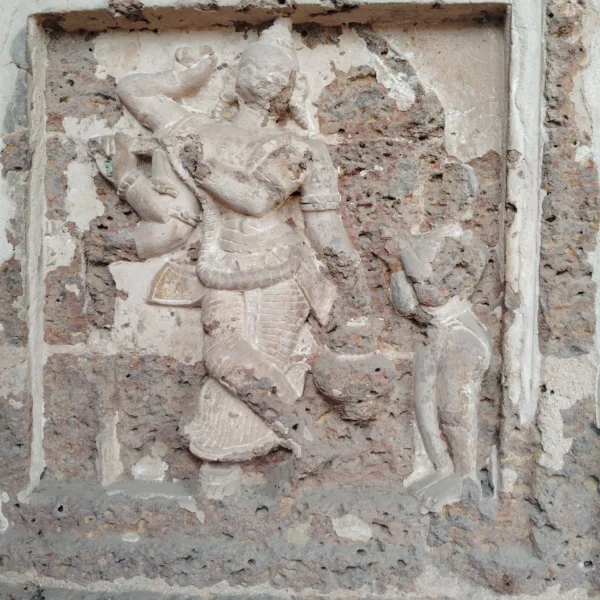
Adina Masjid was built by Sekandar Shah (1358–1389 CE) at his new capital of Pandua. This great congregational mosque is believed to be constructed almost entirely of material taken from Hindu temples. The main foundation of the mosque is made up of stone. Commonly people called it a temple of Shiva, Adinath or Adyanath temple of eighth century at the time of King Gopala. Another mosque at Triveni, namely, Jafar Khan Gajir Masjid, is viewed by scholars to have been a Vishnu temple called the Murari Mohan Temple (eighth century). These colossal mosques/ancient stone temples were decorated with dancing sculptures, and the remnants of such architectural splendors need to be studied closely. There is a twelve-storey temple of Shiva and Bhavani called Meru with thousand devadasis, built in the Pala era, as well. Pala king Mahipala (977–1027 CE) is believed to have donated Meru to his preceptors, Indra and Shiva.
There are numerous such temples—Bangarla of North Bengal; Begunia temple of Barakar of Burdwan District, West Bengal; extant brick temple of Siddheshvara (eleventh century CE) and other temples dating back to fourteenth century CE; Jagjibanpur Mahabihar of Maldah (ninth century CE), a big monastery of Eastern India; Garh Panchakot stone temple of Purulia (ninth–tenth century CE) made of stone; brick temple of Jatar Deul in Sundarban, dating back to tenth century CE; Bahulara Temple of Bankura District.
The representation of dancing sculpture and painting helps us to reconstruct the missing links in the history of Indian dance. There were many renowned sculptors during the Pala period; Dhiman and Bitopala were the most famous sculptors. They introduced a beautiful technique in sculpture and painting which became famous as Eastern Indian style. Bengal have various types of dancing sculptures made up of terracotta or clay of Pre-Christian era (sixth BCE to second century CE). After the advent of Shri Chaitanyadeva, the post Chaitanya period, Bengal had several terracotta temples with innumerable number of dancing sculptures. Apart from terracotta other materials like stone, metal, tusk or ivory, wood etc. were used.
Literature and History
Gauda is mentioned in Panini’s Ashtadhyagi, as well as in Kautilya’s Arthashastra; Vatsayana’s Kamasutra has reference to Gauda.
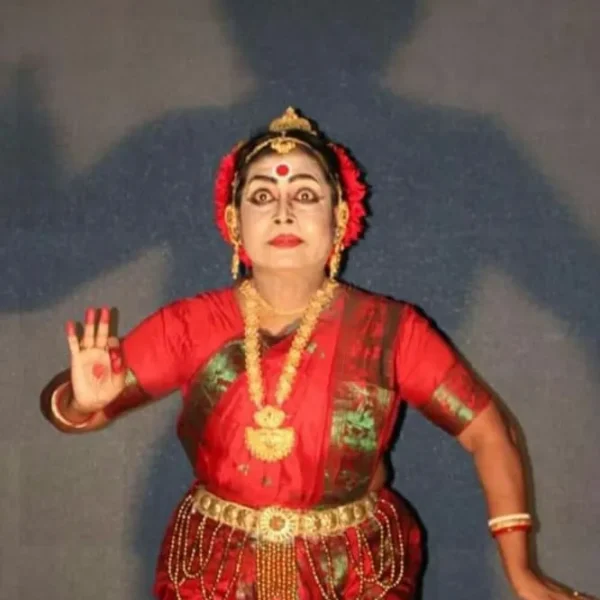
The literature of ancient Bengal, like Charyapada (tenth–twelfth century CE); Nathagitika,narrating details about the Pala dynasty(eighth to twelfth C.E.) support the existence of this dance form. Remacharita Kavya written by Sandhyakara Nandi (twelfth century CE) mentions about Devadasi or Devabarabanita tradition of Bengal. Succeding the Palas, in the Sena period, the Golden Period of Bengal, there were five court poets in Lakshmansena’s court (twelfth century CE); the notable works include Govardhan Acharya’s Aryasaptashati and Pavandutam’ or Dhoik.
Jaydeva’s Gita Govinda is a very famous literary work which inspired dance, music, drama, miniature painting, scroll painting, sculpture and literature also throughout India. Parallel with Charyapada, Nathagitika, Gitagovinda, Bengal’s famous Mangal Kavya, whose composition stretches from eleventh century CE–eighteenth century CE and authored by various poets have detailed analysis of dance. According to story of Behula in Manasa Mangala Kavya we come across an instance of a housewife of the soil of Bengal dancing in the court of Lord Indra.
There are many other references that wives of Bengal were considered famous and honourable dancers –
- Behula: heroine of Manasa Mangal Kavya.
- Vidyutprabha: wife of Jaya Nata of and court dancer of king Lakshmansena.
- Padmavati: Jaydeva’s wife.
After the appearance of Shri Chaitanya Mahaprabhu (1486 CE), Bengal saw a great revival of dance and music. Chaitanya Mahaprabhu himself was a good dancer; he was the chief male dancer of Gaudiya Nritya of medieval Bengal, and the tradition of dance preailed in Bengal as evident in the numerous composition of dance dramas by Rabindranath Tagore.
GURU SHISHYA PARAMPARA: DANCE TRADITION IN BENGAL
Established classical dance forms in India have evolved out of major and minor folk dance elements; for example, Bharatanatyam has evolved out of Sadir, Kuchipudi, Kurubhanji and Bhegavatemela nataka as the major form. Gaudiya Nritya is no exception. The precursors of Gaudiya Nritya is Purulia Chhow, Nachni, Kirtan Nritya; along with them Baul,
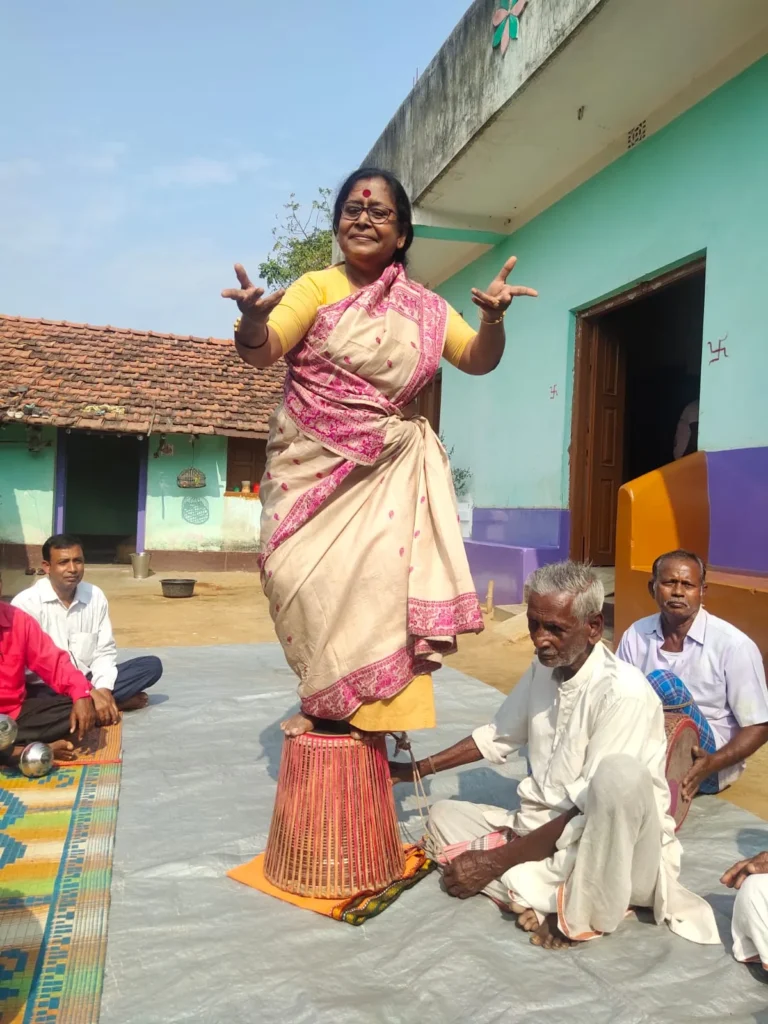
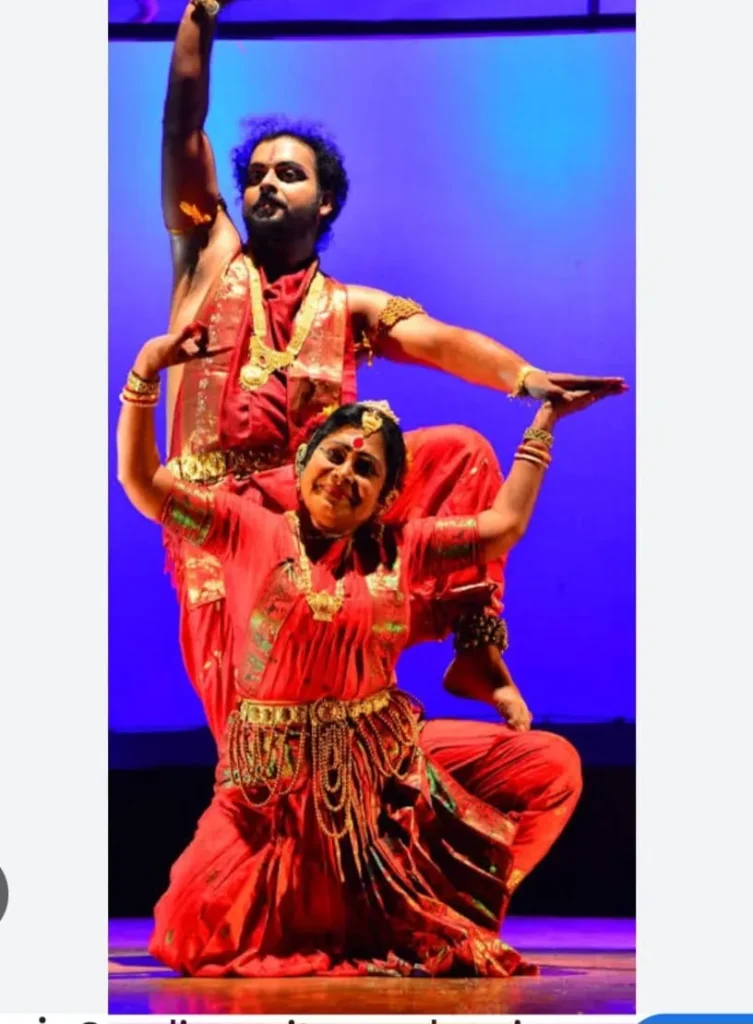
Manasamangal, and martial dance of Bengal constitute the secondary elements.
Present day’s Repertoire of Gaudiya Nritya:
Vandana, Stuti, sloka, etc.
Mangalacharana, Ashtakarm
Alapachari, Talaprabandha Nritya
Mahajanapada Nritya
Lilakirtan Nritya
Virud Nritya
Dasha or Shanti Nritya, etc.
Instruments:
Percussion: shrikhol or mridanga, pakhwaja, dhak, dhol, dundubhi or dhamsa
Wind instruments:flumandira (cymbal), kartala, jhanjh, ghanta (bell), ghungooriolin, sarod, esraj, tanpura
Metal instruments: mandira (cymbal), kartala, jhanjh, ghanta (bell), ghungoor,
Costume
Female: Kanchi (stitch dress), Shadi, Mekhela (skirt type of dress).
Male: Kanchi (stitched dress), Dhoti and Uttariya (upper cover)
Material of the costume: BaluBaluchari, Swarnachari, Garod silk and cotton).
Acknowledgements:
Late Guru Prof. Dr. Manabendu Banerjee, Late Prof. B.N. Mukherjee, Prof. Dr. Pallalo Sengupta, Pt. Amitava Mukherjee, Late Ajay Ganguly, Late Pabitra Bhattacharyya, Late Kirtan Guru Narottam Sanyal, Dr. Soumya Bhowmick, and of course, Narattama Satabdi Acharya, Prof. Dr. Kuntala Bhattacharya.

Pingback: Gaudiya Nritya of Bengal: The Importance and Influence as the Classical Culture and Dance Form - Literatureman
Gain many knowledge about Bengal and Gaudiya Nritya from this article
Interesting points! Seeing AI tools like this-especially with cross-device access-is a game-changer for quick content creation. I’m checking out the Nano Banana Pro Generator to see how it streamlines visuals – might be perfect for my workflow!
I know this site gives quality depending articles and other material,
is there any other web site which provides these data in quality?
I would like to thank you for the efforts you have put in writing this blog.
I am hoping to see the same high-grade content by you in the future
as well. In truth, your creative writing abilities has inspired me to get my very own site now 😉