
Long before Bengal became known for its Bhakti saints, Sufi traditions and rich literary heritage, it stood at the heart of the Buddhist world. Between the eighth and twelfth centuries, Bengal was not merely a follower of Buddhism – it was one of its greatest global centres, shaping religious thought from the Himalayas to Southeast Asia. Even today, traces of that remarkable legacy survive in Bengal’s archaeology, art, literature and folk traditions.
Although Buddhism reached Bengal soon after the time of Gautama Buddha, probably receiving a major impetus under Emperor Ashoka in the third century BCE, it was under the Pala dynasty (c. 750–1161 CE) that Bengal emerged as the intellectual capital of Buddhist Asia. The Palas, devoted patrons of Mahayana and Vajrayana Buddhism, founded in the then Bengal several magnificent monastic universities such as Somapura Mahavihara at Paharpur (now a UNESCO World Heritage Site in Bangladesh) and Vikramashila (Bihar), while lavishly patronizing older centeres like Nalanda. These universities attracted scholars from Tibet, China, Nepal, Sri Lanka and Southeast Asia, making Bengal an international centre of learning. Eminent Bengali scholars such as Atisha Dipankara Shrijnana and Shantarakshita carried Buddhist philosophy beyond India, profoundly influencing Tibetan Buddhism that continues to flourish today.
The flourishing of Buddhism also transformed Bengal’s artistic traditions. The graceful black basalt sculptures of the Pala period, exquisite bronze images, terracotta plaques and refined manuscript paintings established artistic styles that spread across the Himalayan world. Bengal’s Buddhist monks composed philosophical treatises, while mystical poets created the Charyapadas, the earliest known specimens of the Bengali language. These esoteric verses, blending spirituality with everyday imagery, remain a priceless literary treasure and demonstrate Buddhism’s deep contribution to Bengali cultural identity.
Yet Buddhism’s decline in Bengal was gradual rather than sudden. From the eleventh century onwards, the rise of the orthodox Sena rulers reduced royal patronage for Buddhist institutions. Monasteries weakened, many Buddhist communities gradually assimilated into evolving Hindu traditions, and Tantric Buddhist practices increasingly merged with Shakta beliefs. The Turkish invasions of the late twelfth century further damaged monasteries and educational centres that had already been in decline. Contrary to popular belief, however, Buddhism did not disappear altogether. It survived among communities in Chittagong, the Chittagong Hill Tracts and Arakan, while many elements of Buddhist philosophy and ritual quietly entered Bengal’s wider religious culture.
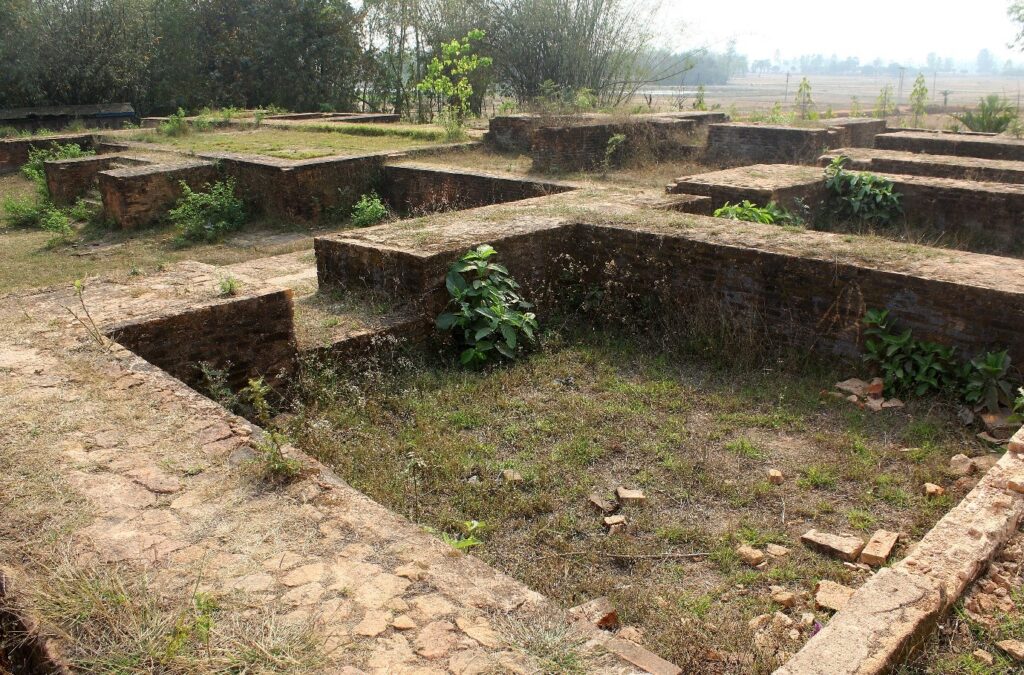
West Bengal too preserves numerous reminders of this forgotten Buddhist past. Archaeological discoveries at Jagjivanpur in Malda revealed the remains of an important Buddhist monastery dating to the Pala era. Buddhist sculptures continue to be unearthed in Birbhum, Bankura, Purulia, Bardhaman and Murshidabad, often worshipped today as Hindu deities, illustrating centuries of religious interaction. Scholars have also pointed to echoes of Vajrayana and Sahajiya Buddhist ideas in the songs of the Bauls, the Nath tradition and later Bengali devotional movements, suggesting that Buddhism survived not only in monuments but also in the region’s spiritual imagination.
The nineteenth century witnessed a remarkable Buddhist revival. Inspired by archaeological discoveries and the writings of scholars such as Rajendralal Mitra, Haraprasad Shastri and Rabindranath Tagore, Bengali intellectuals rediscovered Buddhism as an integral part of Bengal’ss heritage. Organisations such as the Bengal Buddhist Association, founded in Kolkata in 1892, helped revive Buddhist education, temples and cultural institutions. Today, Buddhist communities – including the Barua, Chakma, Marma, Tanchangya and Rakhine peoples – continue to preserve this living tradition across Bengal, while the teachings of Dr. B. R. Ambedkar have introduced Buddhism to new generations in West Bengal.
Bengal’s Buddhist heritage is therefore not merely a chapter of the past but a continuing cultural legacy. Its monasteries once connected the Bay of Bengal to Tibet and Southeast Asia; its scholars shaped Buddhist philosophy across Asia; its artists influenced generations of sculptors; and its literary traditions helped lay the foundations of the Bengali language. Recovering this shared heritage reminds us that Bengal has long been a crossroads of faiths, ideas and cultures – a land where diversity has repeatedly produced some of South Asia’s richest intellectual and artistic achievements.
The brick-built structural remains of the 9th-century Nandadirghi Mahavihara established during the reign of Pala Emperor Mahendrapala. The site reveals monastic cells, central courtyard layouts, and structural features characteristic of Pala-era Buddhist architecture.